1. Location & Issue
2. Solution & Outcome
Ecology Research & Solutions designed, developed and constructed a low-impact marina redevelopment solution that prioritised ecological integrity and material sustainability. The team of workers consisted of 5 hands-on ecologists and one highly experienced machine driver, all working together to remove the old structure and build the new one from the bottom up.
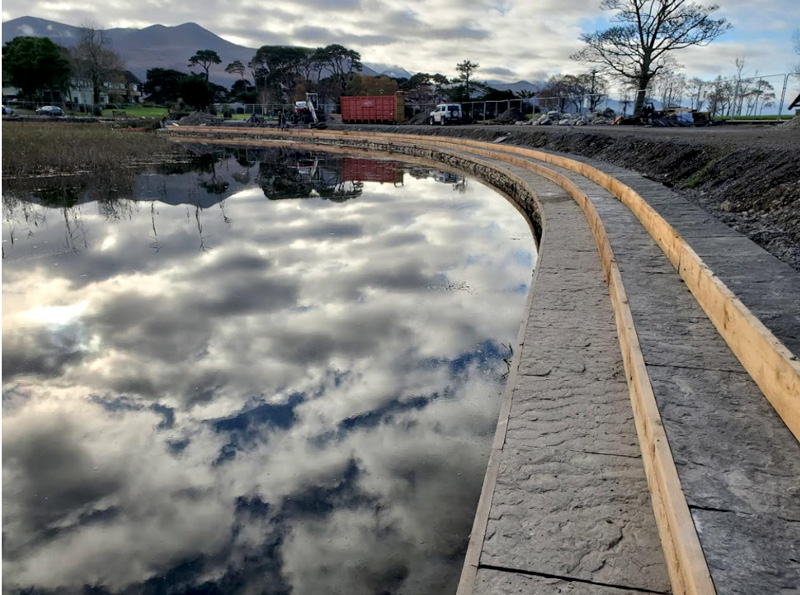
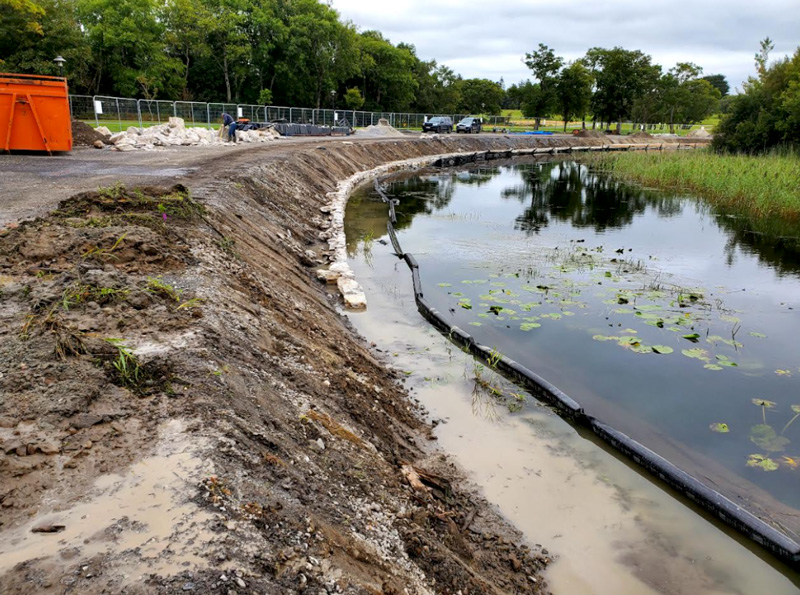
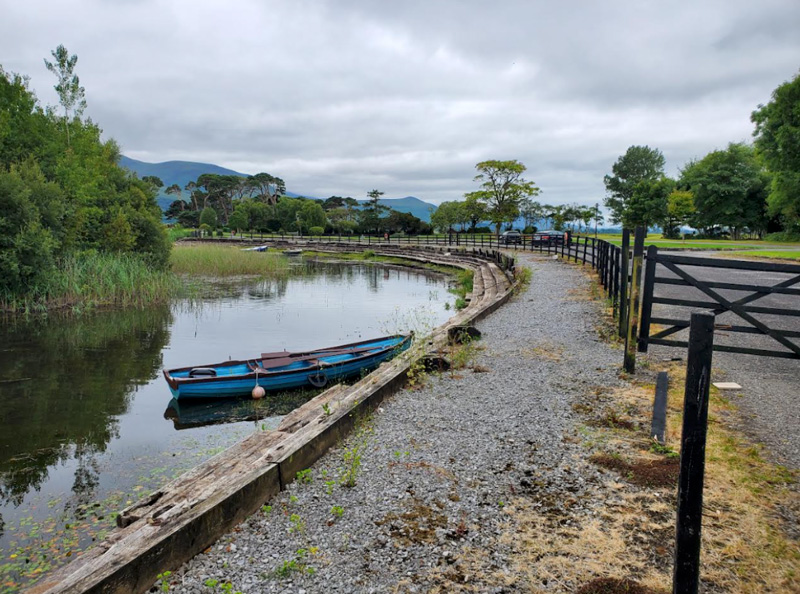
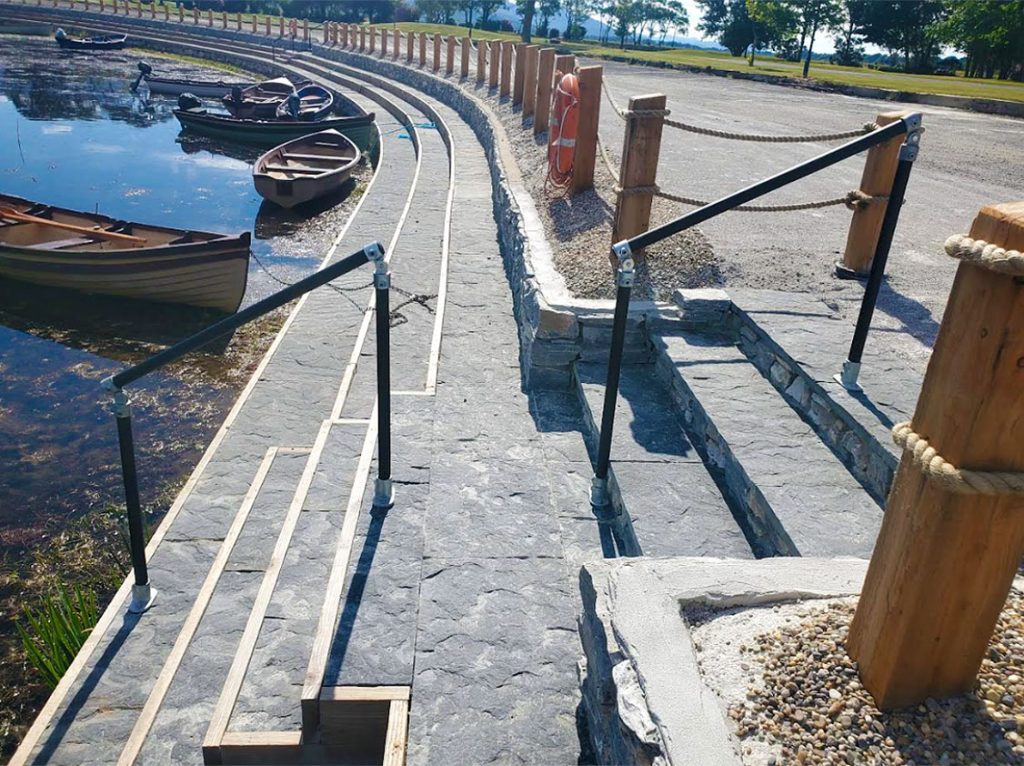
The degraded railway sleepers were carefully removed and responsibly disposed of, eliminating potential contaminant risks to the freshwater environment. The replacement structure was built in an environmentally congenial manner using environmentally congenial materials. The foundation and base of the structure, much of which was under water, was built up using large rectangular building stones placed without cement, eliminating impacts to the aquatic environment. Above the water line, untreated larch was installed in beautiful sweeping bends to provide damage protection for the boats against the structure. A series of Liscannor stone terraces were installed, allowing for access to the boats as the water levels of the lake rise and fall. A natural stone wall, untreated larch bollards and hemp rope fence finished the project and tied it into its surroundings.
Installation was carried out using minimal plant and a controlled construction methodology to protect surrounding aquatic habitats and maintain water quality. This ecologically complex project was delivered through collaboration across multiple stakeholders, with various layers of approvals that resulted in a cost-effective, aesthetically pleasing project,with an ecologically beneficial outcome.
The completed marina now provides a safe, durable and visually sympathetic structure that aligns with the National Park setting. The project successfully balanced infrastructure improvement with strict environmental protection, demonstrating our capability to deliver practical solutions within highly sensitive and regulated environments.